
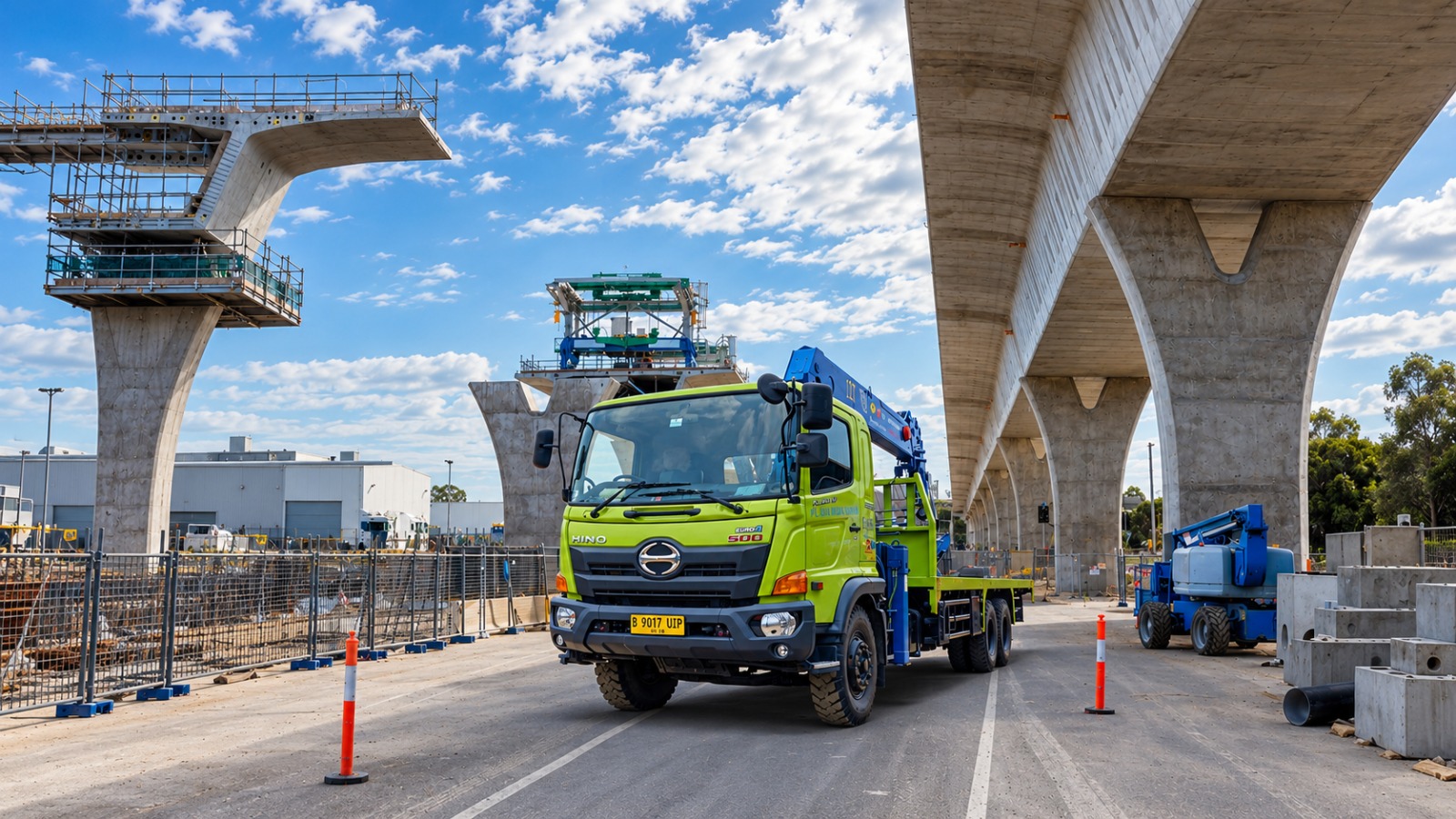
When searching for a truck crane, you may see names like truck crane, truck mounted crane, or loader crane. These similar-looking terms don’t explain which unit is being offered. To have clearer conversations with suppliers, start with the equipment’s identity and the scope of work, then match this information with the unit’s documents.
This guide helps structure your questions when selecting and requesting quotes. It does not establish crane lifting abilities or provide operating instructions. Technical evaluation should use accurate unit data and jobsite conditions.
Why is it important to clarify truck crane terminology?
Liebherr uses the term truck mounted telescopic cranes for one of its product categories.[1] Meanwhile, HIAB describes loader cranes as tools for loading and unloading material near the truck in building-material applications.[2]
From these naming examples, this guide suggests treating general terms as starting points only. Do not assume all truck mounted cranes are small units for cargo beds, or that truck crane is tied to a specific capacity. Ask providers what product and configuration they mean.
If different offers use differing terms, preserve the exact naming from each one. Add the provider’s explanation in a separate column. This way, you don’t alter the meaning behind the quote to make category names look uniform.
Start with checkable unit identification
Before comparing prices, ask for the manufacturer, complete model designation, and documents linked to the offered unit. Photos can help communication, but names in advertisements and outward appearance should not be your only basis for determining suitability.
Use the following list as a prompt for requesting information, not as a checklist for technical approval:
- Crane and vehicle identification given in the quote.
- The offered configuration, with parts that still need confirmation.
- Specification documents and capacity charts matching that identity.
- Photos of the unit in question, with notes if the image is only an illustration.
- The contact responsible for technical questions about the proposed unit.
If photos and documents mention different units, flag the difference and ask for clarification. Do not combine information from several models into a single description as if they refer to one device.
Describe the required work in concrete language
Statements like “need a truck crane for a project” leave much unclear. To help providers understand your request, describe the item to be moved, the origin and target locations, as well as any known site conditions. Separate established data from initial estimates.
For example, a procurement team could collect photos of the item, available weight documents, site plans, and the field contact’s details. If something is not complete, state “not yet confirmed.” Avoid filling gaps with numbers from general articles or unrelated jobs.
Also mention whether your need is for loading/unloading, lifting at the location, or both. Ask providers how their proposal addresses these tasks. This helps you compare offers without treating the category name itself as a green light for use.
Use a simple comparison log
| Section | What to record | Follow-up question |
|---|---|---|
| Terms in offer | Category name used by provider | What unit does this term mean? |
| Unit identity | Manufacturer, model, and document references | Do documents refer to the quoted unit? |
| Project needs | Item, location, and scope information | Which aspects need more data? |
| Service scope | Quoted inclusions and stated exclusions | What is not covered or not yet agreed? |
| Next steps | Responsible person and open questions | Who will provide a written confirmation? |
This log is an editorial suggestion. Adjust columns as fits your procurement process; the content is not a manufacturer’s requirement or a provider’s service promise.
Distinguish preliminary information from selection decisions
After collecting notes, check if each quote addresses the same needs. Mark information that’s still missing before you compare. A shorter offer may not cover the same scope as a more detailed one.
Keep versions of the quotes, reference documents, and clarifications together. If the unit or job description changes, request an explanation of which details have also changed. Do not assume that replies for the previous unit automatically apply to the new one.
The goal of this process is to prepare a clear request: the discussed unit is identified, project information is readable, and open questions have someone responsible. On this basis, technical and commercial discussions can move forward—without relying on the term truck crane alone.
References
Plan your next step
Explore the equipment catalogue, then prepare the location, schedule and task details for your enquiry.
Explore rental equipment ↗